Charlotte, North Carolina, is known for its beautiful seasons, but also for its significant rainfall throughout the year. For homeowners who have invested in a patio enclosure, understanding and implementing effective drainage is not just a recommendation—it's a necessity. Proper drainage is crucial for protecting your investment, ensuring the longevity of your enclosure, and maintaining a comfortable, functional outdoor living space, even during the heaviest downpours.
The Importance of Effective Drainage for Patio Enclosures
Ignoring drainage in a patio enclosure can lead to a host of problems that diminish both its appeal and structural integrity. Poor drainage can result in:
- Water Damage: Standing water can seep into the enclosure's foundation, walls, and flooring, leading to rot, mildew, and costly repairs over time. Mold and Mildew Growth: Constant dampness creates an ideal breeding ground for mold and mildew, which can pose health risks and produce unpleasant odors. Structural Issues: Water accumulation can compromise the integrity of the enclosure’s framing, leading to weakening and potential safety hazards. Pest Attraction: Stagnant water can attract mosquitoes and other insects, making your enclosed space less enjoyable. Reduced Enjoyment: A damp, musty, or damaged enclosure is simply not a pleasant place to relax or entertain.
Common Drainage Challenges in Patio Enclosures
Several factors can contribute to drainage issues around patio enclosures, particularly in areas like Charlotte with varied topography and rainfall patterns.
Inadequate Gutter Systems
Often, existing home gutters aren't sufficient or correctly positioned to handle the additional runoff from a patio enclosure roof. Undersized gutters or those with improper slopes can easily overflow.
Improper Grading and Sloping
If the ground surrounding your patio enclosure doesn't gently slope away from the structure, water will naturally pool against the foundation or slab, creating significant problems.
Clogged or Undersized Downspouts
Even robust gutters are useless if the downspouts are too small to handle the volume of water, or if they become clogged with leaves and debris, causing water to back up and spill over.
Foundation and Slab Issues
Cracks in the concrete slab or an improperly sealed foundation can allow water to penetrate directly into the enclosure or beneath it, causing unseen damage.
Permeable vs. Impermeable Surfaces
The type of flooring or surrounding landscape materials also plays a role. Impermeable surfaces like concrete can increase runoff, while certain permeable options might still hold too much moisture if not properly designed.
Key Drainage Solutions for Charlotte Patio Enclosures
Addressing drainage issues requires a thoughtful and often https://gxr-charlotte.theglensecret.com/sunroom-safety-features-glass-locks-and-more-for-charlotte-homes multi-faceted approach. Here are some effective strategies:
Robust Gutter and Downspout Systems
Upgrade to larger capacity gutters and ensure they are installed with the correct pitch. Increase the number of downspouts if necessary, and direct them away from the enclosure's foundation using extensions or splash blocks.
Strategic Grading and Sloping
Regrading the landscape around the enclosure to create a gentle, consistent slope away from the structure is fundamental. This ensures that water naturally flows away rather than accumulating.
French Drains and Subsurface Drainage
For persistent pooling or high water tables, a French drain can be highly effective. This involves burying a perforated pipe in a gravel-filled trench to collect and divert groundwater or surface runoff away from the enclosure.
Permeable Paving and Materials
Consider permeable pavers or gravel for pathways or surrounding areas. These materials allow water to infiltrate the ground rather than running off, reducing the burden on other drainage systems.
Integrated Water Diversion Channels
In some cases, installing subtle channels or swales can help guide water to appropriate collection points or away from sensitive areas.
Professional Assessment and Installation: A Smart Investment
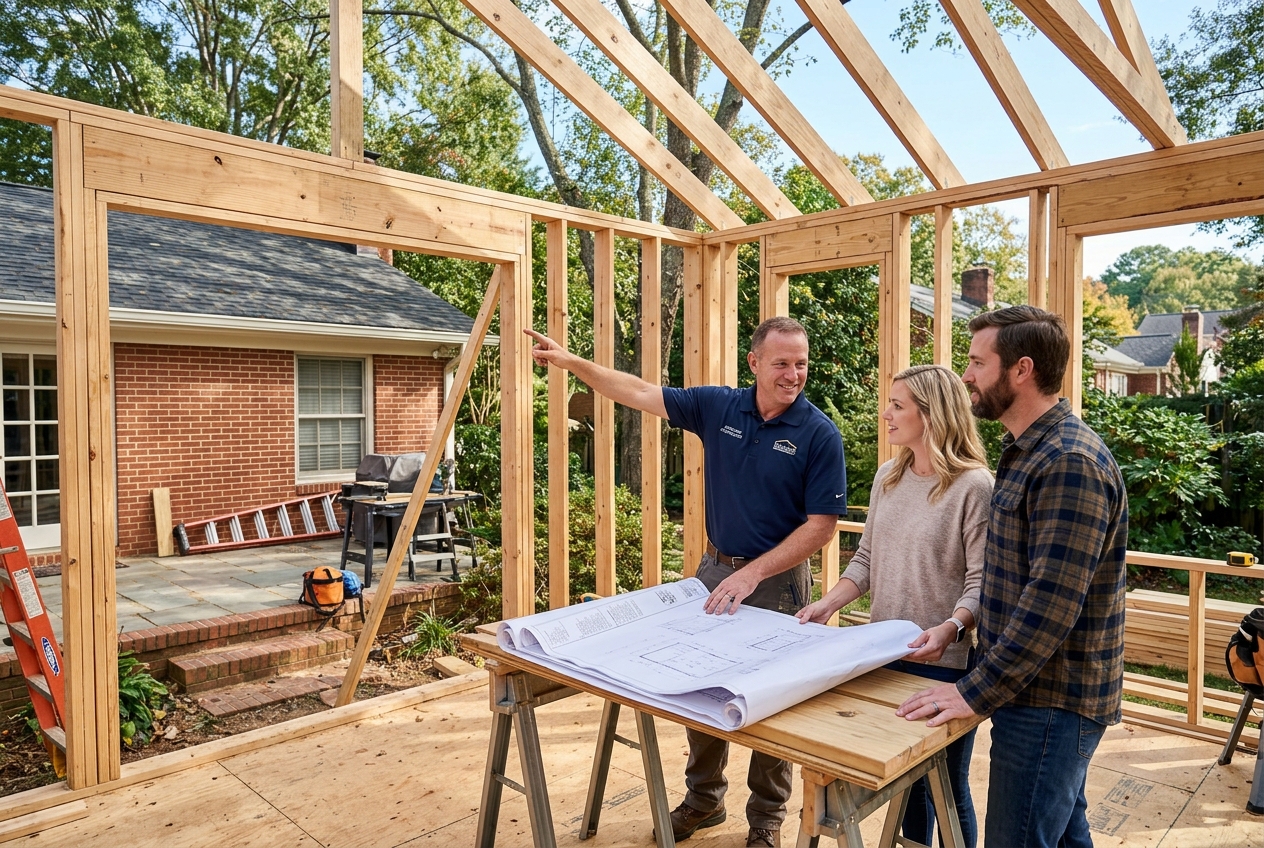
Designing and implementing an effective drainage system for a patio enclosure is often more complex than it appears. It requires an understanding of local climate, soil conditions, and structural engineering principles. This is where the expertise of a professional remodeling team like Green Exterior Remodeling becomes invaluable. Our team can assess your specific situation, identify potential problem areas, and design a customized drainage solution that integrates seamlessly with your existing structure and landscape. Investing in professional installation ensures that your drainage system is not only effective but also durable and compliant with local building codes.
Maintaining Your Patio Enclosure's Drainage System
Even the best drainage system requires some upkeep. Regular maintenance can prevent common issues:
- Clean Gutters and Downspouts: Periodically remove leaves, twigs, and other debris to prevent clogs. Inspect for Damage: Check for cracks, leaks, or disconnections in gutters and downspouts, and repair them promptly. Monitor Water Flow: During heavy rains, observe how water is flowing around your enclosure. This can help identify new problem areas or confirm the effectiveness of your existing system.
Ensuring proper drainage for your patio enclosure is a critical step in preserving its beauty, functionality, and structural integrity for years to come, especially with Charlotte's weather. By understanding the challenges and implementing effective solutions, you can protect your investment and enjoy your outdoor living space to the fullest. For expert advice and comprehensive drainage solutions, consider reaching out to Green Exterior Remodeling. Our team is dedicated to creating durable and enjoyable outdoor spaces for homeowners.